Aerodynamics is one of the most powerful tools automakers have for improving fuel economy — and understanding the principles behind it can help you make smarter choices when buying, driving, and modifying your vehicle.
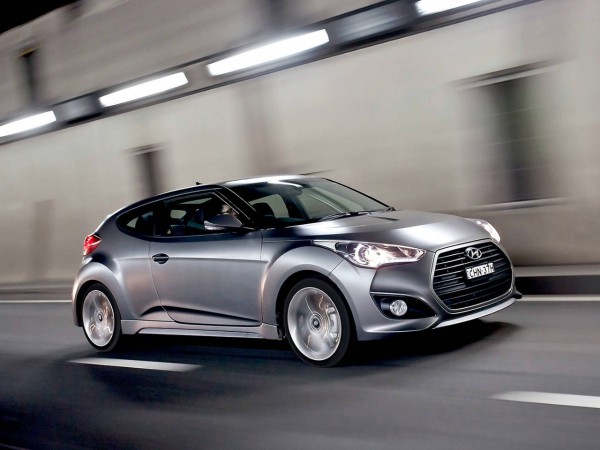
Automakers have been obsessed with aerodynamics since at least the 1930s. But the growing pressure to improve fuel economy — driven by rising fuel prices, stricter emissions regulations, and consumer demand for efficiency — has pushed aerodynamics to the very top of the engineering priority list. Every 2% reduction in aerodynamic drag results in approximately 1% improvement in fuel economy. Over a vehicle’s lifetime, those savings add up to thousands of dollars.
The key metric is the coefficient of drag (Cd): the lower the number, the more easily the vehicle slips through the air. A change in Cd of just 0.01 changes the combined fuel economy of a vehicle by approximately 0.1 mpg. Here are 6 essential tips for understanding — and benefiting from — better automotive aerodynamics.
Tip 01
Understand Drag and Why It Matters at Speed
At urban speeds, most of the fuel your engine burns goes toward overcoming tyre rolling resistance and mechanical friction. But aerodynamic drag is different: it increases in proportion to the square of your speed. This means that at motorway speeds, aerodynamic drag can account for more than half of all the fuel your vehicle uses. Double your speed and you quadruple the drag force — which is why aerodynamics matters so much for highway fuel economy.
Tip 02
Remove Roof Racks and External Attachments
Roof racks, bike carriers, cargo boxes and bull bars all disrupt the smooth flow of air over your vehicle’s body, dramatically increasing drag. A cargo box on the roof can increase fuel consumption by 10–25% at motorway speeds. Remove these items when they are not needed — most modern roof racks have cross members that can be taken off in minutes. When you do need a roof cargo carrier, opt for a low-profile aerodynamic box and position it as far forward on the rack as possible.
Tip 03
Keep Your Tyres Properly Inflated
Underinflated tyres increase rolling resistance and can also affect the aerodynamic behaviour of your vehicle by altering its ride height and stance. Check your tyre pressure at least once a month and always inflate to the manufacturer’s recommended level. As a bonus, correct tyre pressure improves handling, extends tyre life, and prevents blowouts. On some vehicles, a 1 psi drop in all four tyres can reduce fuel economy by around 0.4%.
Tip 04
Maintain a Smooth, Consistent Speed
Because aerodynamic drag grows with the square of velocity, maintaining a steady speed on the motorway is far more efficient than constant acceleration and braking. At 70 mph you experience roughly twice the aerodynamic drag as you do at 50 mph. Use cruise control where safe to do so on long motorway journeys — it maintains a consistent speed far more effectively than most drivers can manually, and can improve fuel economy by 7–14% on the highway.
Tip 05
Keep Windows Closed at High Speeds
At low speeds, opening a window to let in cool air costs very little in fuel economy — and can save more fuel than running the air conditioning. However, at motorway speeds, open windows create significant turbulence and increased drag, costing more fuel than the air conditioning system would have used. As a general rule, use open windows in town and air conditioning on the motorway for the best overall balance of comfort and efficiency.
Tip 06
Appreciate How Automakers Design for Aerodynamics
Modern car designers use wind tunnels, computational fluid dynamics (CFD) software and years of refinement to achieve low drag coefficients. Features like flush door handles, carefully shaped wing mirrors, underbody panels, active air vents, and carefully optimised wheel designs all contribute to reducing a vehicle’s Cd. Hyundai’s own Fluidic Sculpture design philosophy — inspired by flowing water and organic forms in nature — is as much an aerodynamic strategy as an aesthetic one. The Sonata Hybrid, for example, achieves a drag coefficient of just 0.25 — among the lowest of any production car in the world.

Better aerodynamics means better fuel economy, lower emissions, reduced noise intrusion, and a more confident, stable driving experience at speed. It is one of the most compelling reasons why Hyundai’s investment in Fluidic Sculpture design pays dividends not just aesthetically, but in the real-world running costs of every vehicle it produces.